Resources I used to gather information about the time period:
I used this website to learn about the 1930s, specifically in Minneapolis, Minnesota. This quote and photo were the most useful for me. Although this incident would have occurred after I rode the Orient Express, the social turmoil would have been well underway. I would have to know what the social climate was in Minnesota as a means of character research:
“Tension from the economic hardship due to the stock market crash in 1929 erupted in June 1934, when a Teamster strike turned into a violent showdown with police. The strikers opposed trucking companies that distributed throughout the Midwest and effectively shut down business in the city. On June 20th, now called “Bloody Friday,” a standoff in the Warehouse District led police fired into a crowd of strikers armed with pipes, killing two people and injuring 67 others. The strike ended a month later on August 22, 1934.”
I used this website to see when the Orient Express ran, so that I could calculate its off-season.
https://www.luxury-trains.co.uk/venice-simplon-orient-express/train-timetables.htm
I used this website to map out the trajectory of our train’s journey. I wanted to have a good understanding of where we were stuck specifically and how far we were from the nearest rescuers.
https://rail.cc/train/istanbul-to-belgrade#r2
I also watched Grand Hotel, as was recommended by our costume designer. I focused on the outfits of the characters in the movie so that I might have a better understanding of how Mrs. Hubbard would move in her clothes.
Helpful for the education of women during the 20th century:
“Wealthy girls might be taught by a governess or sent to a convent school to learn the basics of reading and writing. Middle class families could generally only afford to educate their sons and in lower class families neither the boys nor the girls were educated. As America grew, private tutors were slowly replaced by town schools.”
Helpful to understand the role of theatre in the 1930s:
“Though it would seem that this should have been a decade of loss for artistic theater, it was actually a period of major transformation and growth. While the economic state of the country worsened, the Broadway community rallied again. An estimated 25,000 theater people were displaced by the effects of the depression, the majority in New York. In some theaters, prices were dropped to a 25-cent minimum, with a $1.00 top price. Actors and producers experimented with repertory productions, to keep as many working as often as possible, and to keep as many productions as possible active.”
https://www.talkinbroadway.com/bway101/5b.html
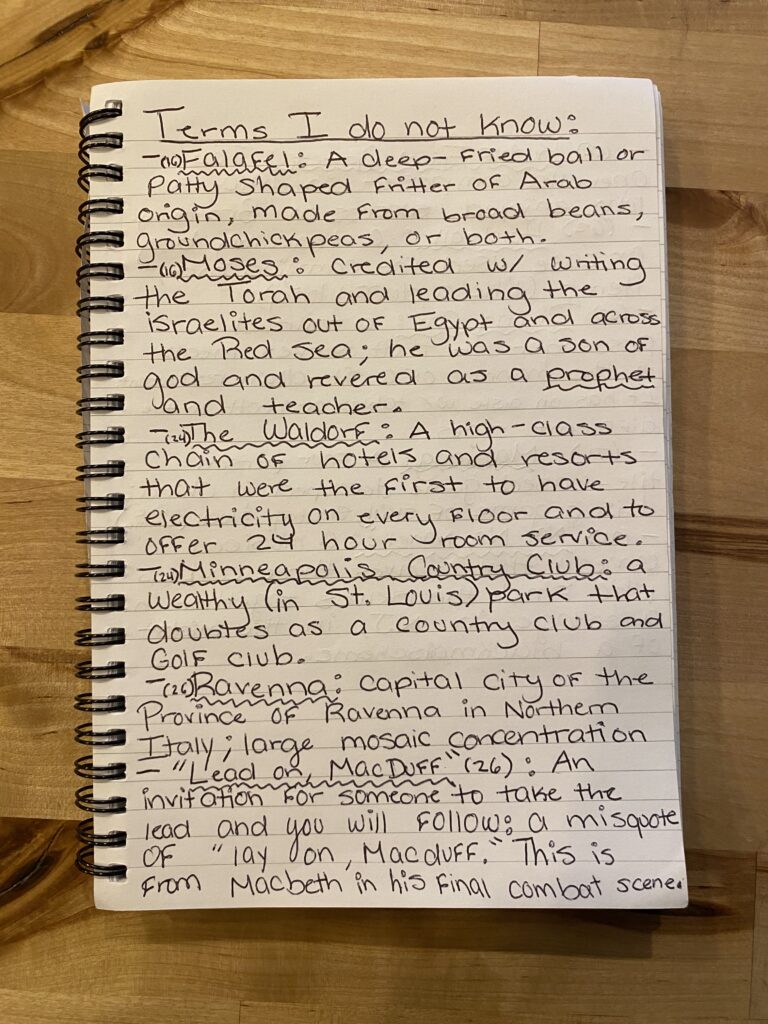
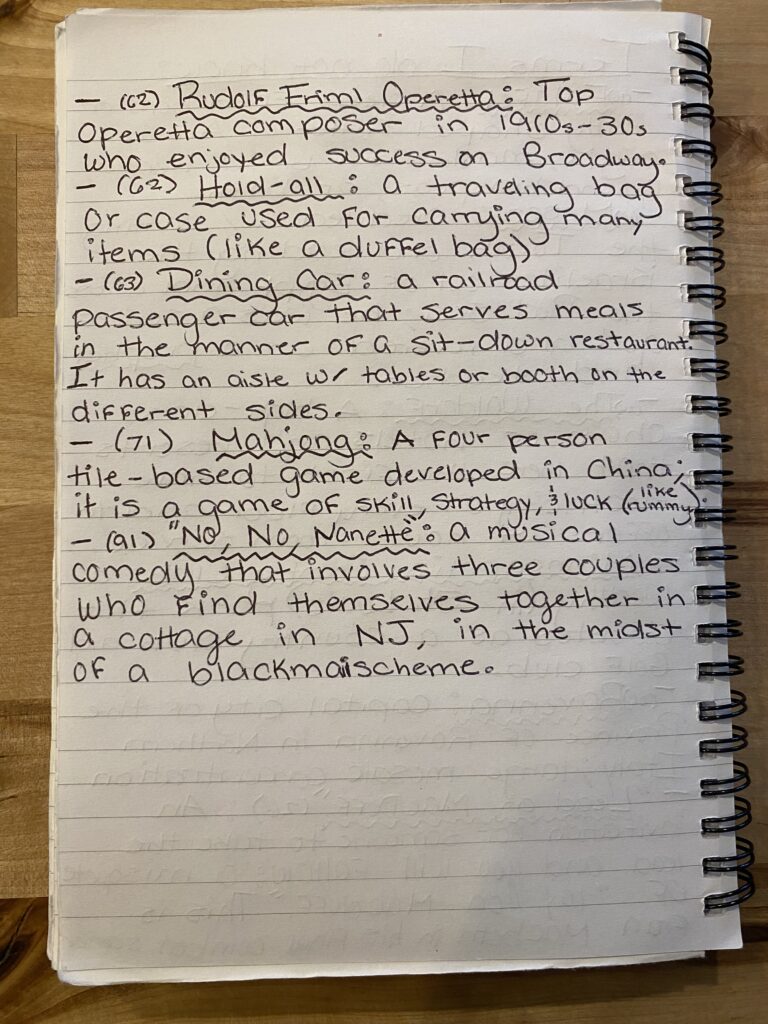
I recorded any words or ideas that I needed more clarification on and researched their meanings. Here is my written list:
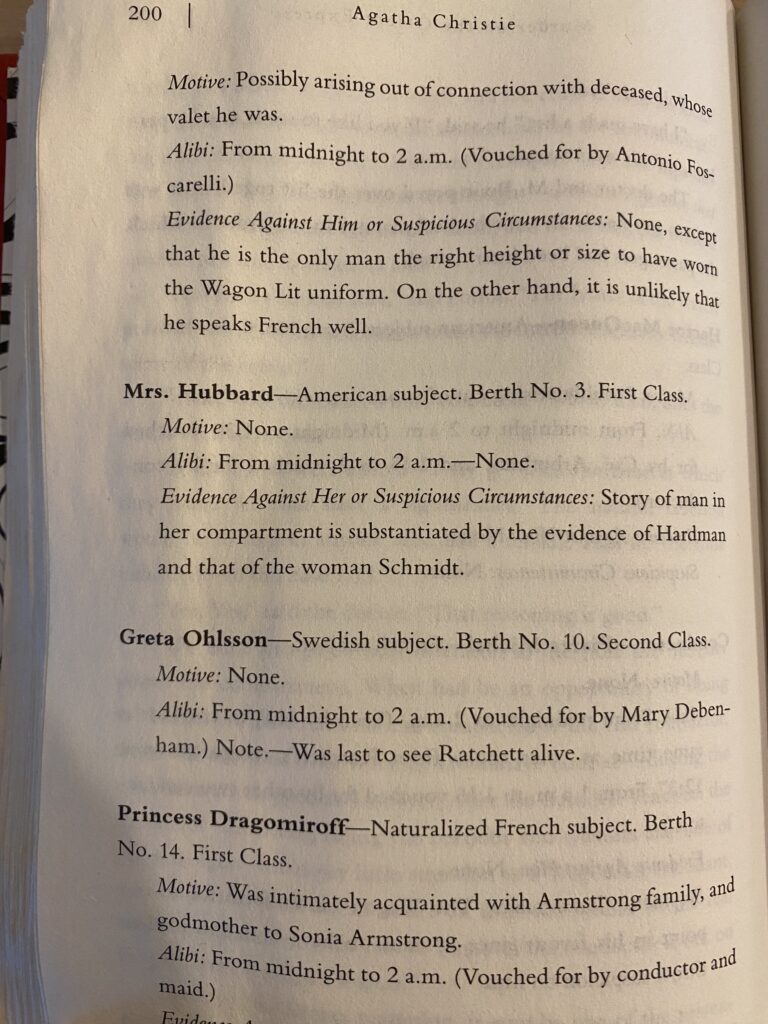
I utilized these pages in the novel Murder on the Orient Express to fill in the blanks left unanswered by the playwright. The first two images describe the Daisy Armstrong case in fuller detail; the latter image is Poirot’s recordings of Mrs. Hubbard in his detective journal.
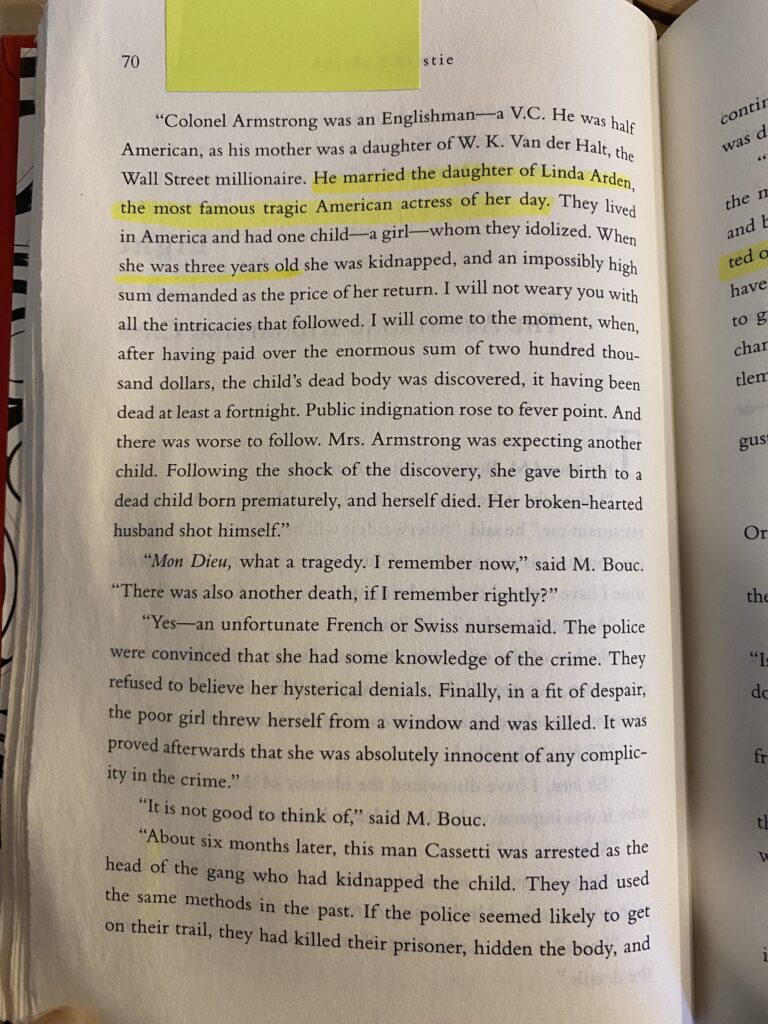
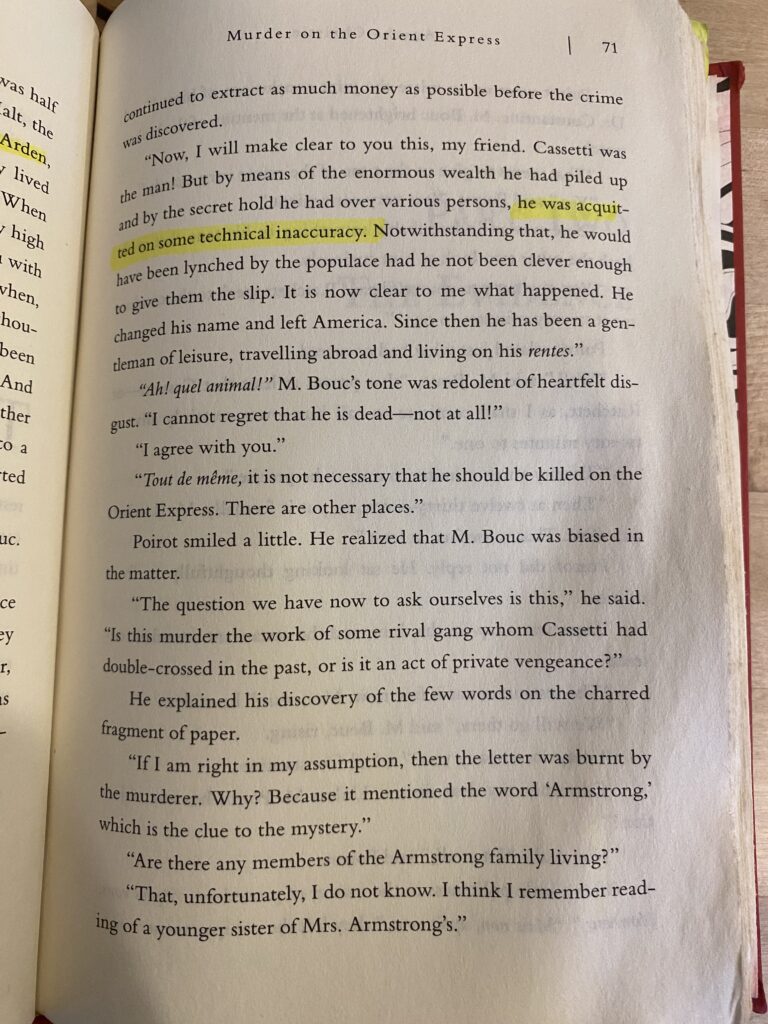
I also researched the Lindbergh kidnapping case, as Christie’s novel was largely inspired by those real life events. It was very disturbing, yet helpful to understand the specifics of how a case such as that would unfold. I used this information to supplement parts of the Daisy Armstrong’s kidnapping that were unclear.
https://www.fbi.gov/history/famous-cases/lindbergh-kidnapping
- Additional resources about society/politics/ information pertinent to my character in the 1930s:
https://www.history.com/topics/great-depression/1930s